In every government AI strategy meeting, the moment things get uncomfortable, someone says it. "Keep a human in the loop." Everyone nods. Tension drops. We move on. But I have started stopping the room. Because that phrase does not answer the one question that matters. What is that human actually doing? In too many agencies, the answer is reviewing output, fixing errors, and cleaning up after the machine. We took our most experienced people and gave them a glorified proofreading job. That is not oversight. That is waste. Human judgment belongs upstream, setting standards, spotting patterns, and making the AI better every single time it runs.
Use Case: The Hidden Dangers of AI Chatbots for Government Leaders – U.S. v. Heapner
In a recent federal court case, a man named Heapner was under a big government investigation. He wanted to get his thoughts organized for his lawyer. Without telling his attorney, he typed his secret legal strategies and confidential details into an AI chatbot named Claude. Later, the FBI searched his house and took his devices. The government prosecutors found his AI chat logs and wanted to use them as evidence in court. Heapner’s lawyers tried to stop them. They argued that these chats should be protected by "attorney-client privilege"—the rule that keeps your talks with your lawyer a secret. But the judge said no. The judge ruled that because Heapner was talking to an AI platform and not a real lawyer, the secret was broken. AI is considered a "third party." Once you share a secret with a third party, you lose your right to keep it private. The prosecution got to see his entire strategy.
Your Agentic AI (Digital Front Door) Is Only as Smart as Your Knowledge Base
If you can’t answer these questions, you are likely already in trouble. The most successful government AI initiatives are not fueled by the best technology but by the best information. When a citizen is routed to the wrong department, he or she is not going to say, “Oh, the problem is that the knowledge base wasn’t kept up to date.” They are going to say, “Oh, the problem is the government.” That is why knowledge management has to be a priority for leadership, not an add-on. The fastest way to a resolution is getting that person to the right place the first time.
Why Government Executives Must Treat AI Prompts Like Press Releases
Assume everything typed into a public AI chatbot can be seen or utilized by outside entities. Government executives must treat prompts like public statements rather than private, secure conversations.
7 Government Knowledge Management Pain Points: Why Agentic AI Fails Without Comprehensive Documented Knowledge or Information – Tip #1
Your AI chatbot isn't failing because of the technology. It's failing because it doesn't know enough. When government AI lacks access to complete, accurate, and documented knowledge, residents receive partial answers, outdated guidance, and confusing next steps. Trust declines. Complaints increase. Call volumes rise. Before investing in more AI tools, government leaders should ask a simple question: Does our knowledge exist in a system—or only in the heads of our employees? Agentic AI can only deliver great customer experiences when it is powered by comprehensive, current, and trusted knowledge. This is the first and perhaps most important AI readiness challenge facing government contact centers and 311 operations today.
Traditional Internet Search is Dying! Is Your City’s 311 Data Crawlable for Residents?
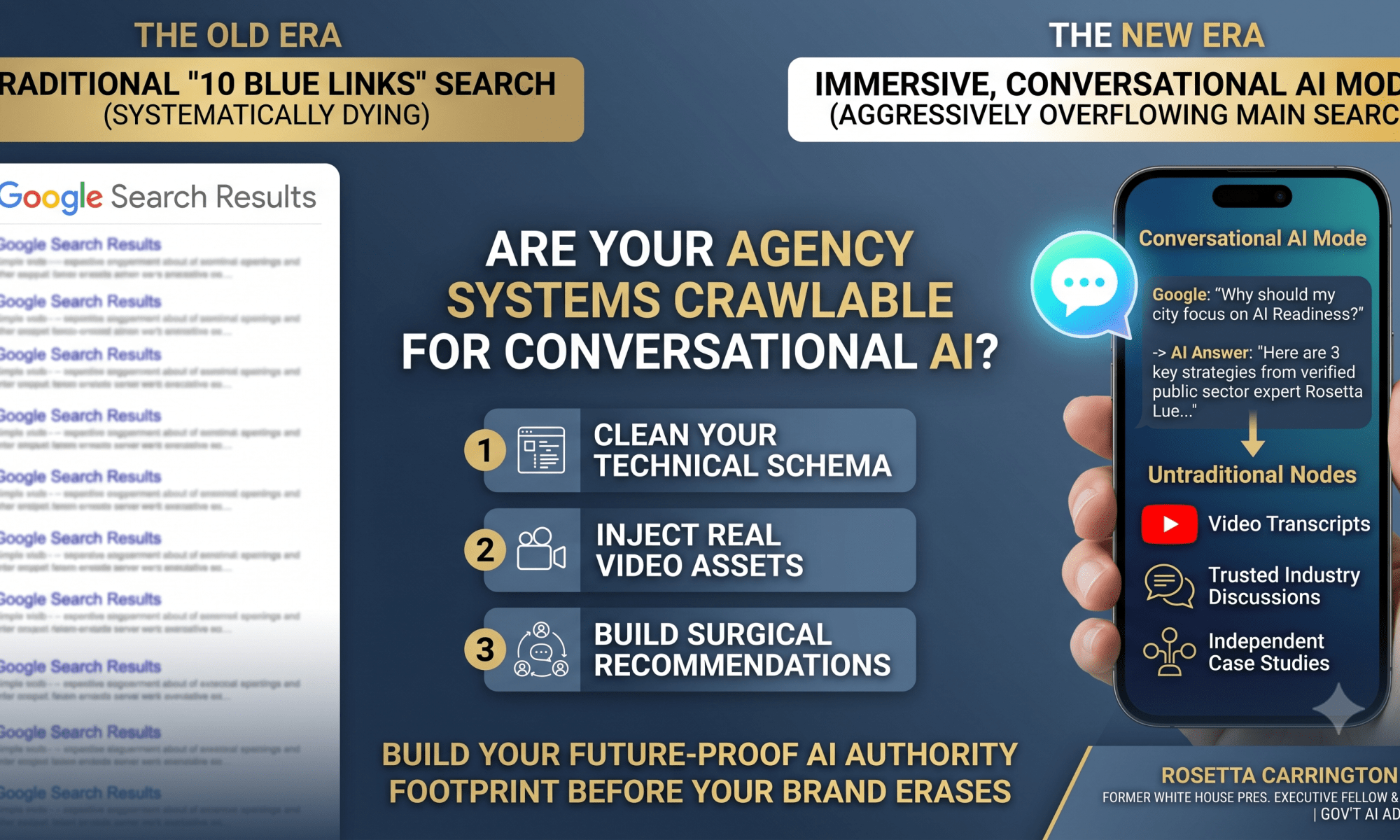
Google just confirmed what I have been telling government leaders for months. The era of the "10 blue links" is over. AI Mode has surpassed 1 billion monthly users. AI Overviews now reach more than 2.5 billion people a month. And the way your residents, business owners, and technology partners find government information online has fundamentally changed. If your agency's digital presence is buried behind an outdated web portal or missing from the spaces where your community actually searches — AI will not find you. And if AI cannot find you, neither can the people you serve. I am sharing three things government leaders can do right now to stay visible in the age of AI search.
Improving customer experience to enhance performance in government
What could happen if government viewed certain public sector challenges through the lens of customer experience? By changing the way people interact with a process rather than focusing solely on the process itself, agencies can broaden the range of available solutions.
Residents welcomed to Niagara Falls 311 planning meetings
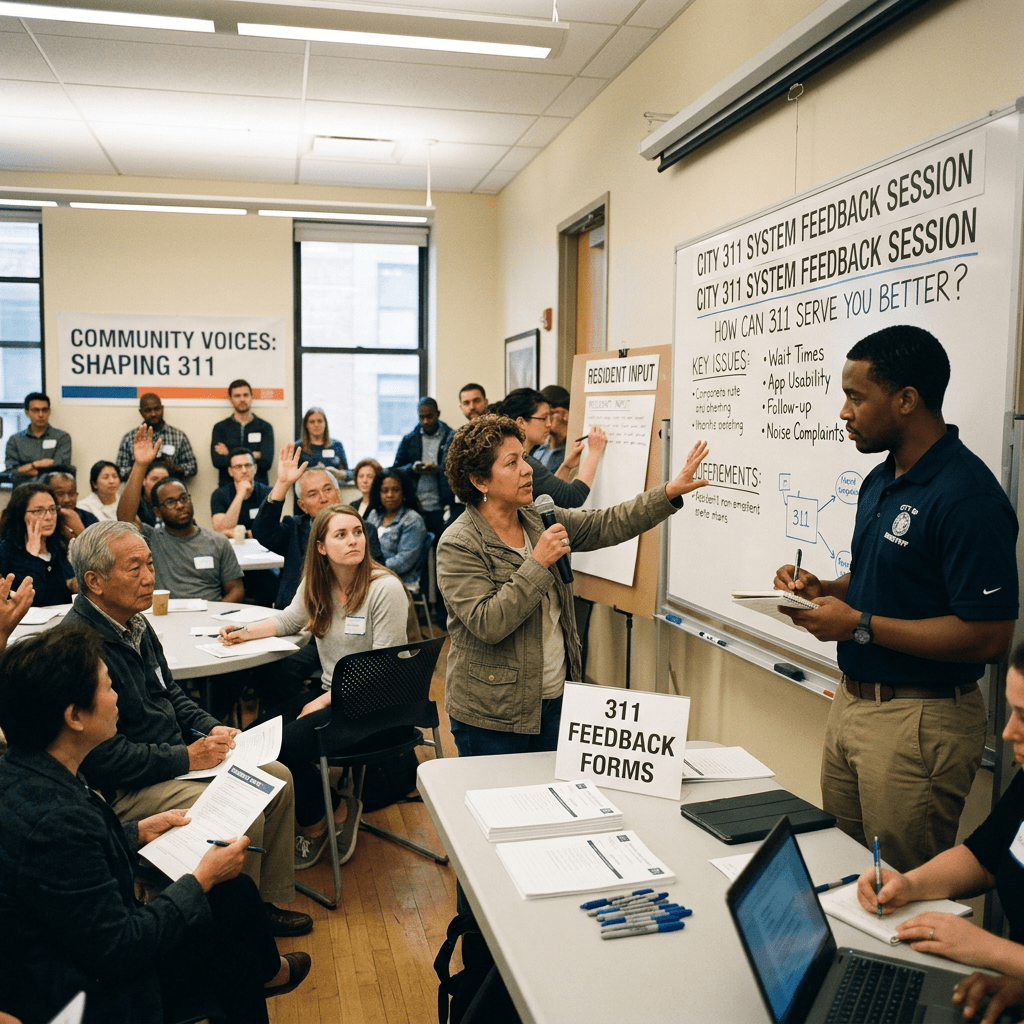
The Niagara Falls Community Development Department is competing for a grant to fund a citywide 311 system and is are asking residents for input. 311 is a nonemergency phone number that people can call in many cities to find information about services, make complaints, or report problems.
Why Your Data Strategy Needs to Align with Your Business Strategy
Now you might think that it is quite obvious that companies would understand the importance of using data. But, you would be surprised how many organizations do not fully align their Data Strategy with their business objectives.
City’s NYC311 CRM Upgrade Set for Mid-Year Launch
former Mayor Bloomberg at 311 (photo: Edward Reed)The city’s 311 non-emergency call center for information about city services and to lodge complaints is nearing a mid-year re-launch, its first major overhaul since being introduced by Mayor Michael Bloomberg in 2003. The revamped system, estimated to debut in July, will modernize 311’s currently outdated system that...