
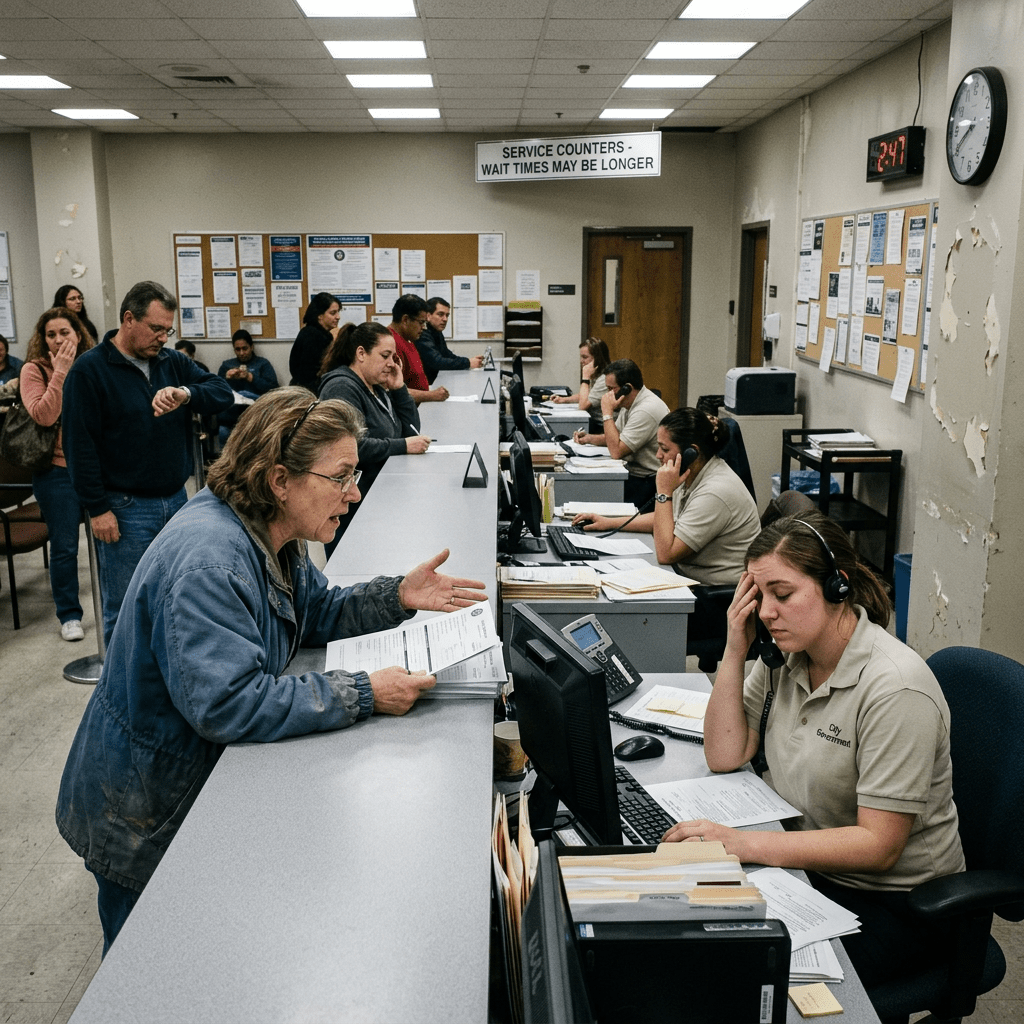
I need to be completely honest with you. While contact centers within the government have improved, there is still a divide between what residents want and what local government agencies are providing. Worse, this gap has only been growing.
Residents no longer compare you to the DMV a few miles away. They compare you to Amazon. They compare you to their bank. They compare you to the app they used this morning when ordering coffee while they were still in their pajamas. That is the baseline. And it is not changing.
However, you do not need an entire budget change or a complete IT transformation to begin narrowing that gap. There are a handful of simple steps, in the correct order, that you can take.
Here are four things forward-thinking government contact center directors are doing today that will create an improved resident experience and improve your agency’s brand.
1. Make it easy for residents to find and reach you.
I have witnessed many municipalities fall into the following pattern. A resident has a problem. They try to find a contact for the problem and are unsuccessful. So they call Twitter or Facebook or NextDoor and share the story with the world.
You can avoid this pattern altogether. By providing a simple and obvious route for a resident to submit a complaint or notify your agency of a problem, you can resolve issues before they escalate. That includes building a complaint portal on your website. Including a callback mechanism. Creating an email address that is clearly visible and not buried in your organizational chart. None of these options is complex, but they will work.
The end result is more than just damage prevention; it can build trust. If a resident is confident that someone from your team is following up on the issue that was brought to your agency, and that there is a human being behind the screen, they will feel valued. In many cases, this will be more impactful than leaders think.
2. Create solutions with residents rather than solely for residents.
One of the greatest mistakes in government customer experience I have come across involves building something without the residents who will use it being part of the conversation.
Whether you are redesigning a specific service process or building out a new digital interface, you should engage with residents early in the process. This could be asking for feedback via social media channels. It could be hosting a remote focus group. It could be circulating a simple survey.
You will receive more accurate and creative solutions and will have fewer surprises when the project goes live. This is a matter of practice, yes, but it is also a matter of smart business practice. When residents participate in a program, it is much more likely that they will both use the program and advocate for the program, and significantly fewer will be vocal against it. It is good for the community, and it is good for you.
3. Provide around-the-clock digital access.
This should be table stakes in 2026. You will not see residents calling your contact center in business hours. You will see them trying to renew a business license at 9 p.m. They want responses in their timeframe, not yours.
| “Currently, just around 25% of contact centers are successfully embedding digital automation into their workflows, meaning the majority are allowing constituents to continue to sit on hold for what could otherwise be done digitally in a flash.” — CMSWire |
A good self-service portal. A searchable Frequently Asked Questions (FAQ). A chatbot for the most commonly asked questions. These things don’t replace your agents. They free your agents to take the calls that truly require human attention. And everyone gets a better experience from that.
4. Develop your AI readiness plan before you buy any tech.
I’d like to pause for just a moment here because it’s in this area where I’m currently seeing the most confusion.
AI isn’t a “push-button” solution. I say that most kindly because I’ve seen agencies move to roll out AI solutions and then have the tools end up going unused, misunderstood, or just making things more complicated than they started out.
| “According to McKinsey, 78% of companies are now using AI to support at least one business function. But what isn’t the headline is this: most enterprises are implementing AI faster than they are able to put it to use.” — CMSWire |
An AI readiness plan will answer the important questions before you spend a single dollar. Questions such as:
- What data do we have, and is it accurate enough to be utilized?
- Have we trained our agents to work with AI tools—not around them?
- Do we have governance policies in place to safeguard constituent privacy and meet regulatory requirements?
- Who takes responsibility for it if something goes wrong?
| “The winners among these are organizations that started with clear governance, data-quality controls and compliance frameworks, then invited their IT, legal, and customer experience leadership into the conversation early.” — Sprinklr |
You don’t need to have all the answers right now. But you do need a plan. And the plan needs to start with the people, not the technology.
The Bottom Line
Building a great government contact center brand isn’t about being Amazon. It’s about showing up for your constituents in a way that is easy, predictable, and human. Make it easy to contact you. Listen before you build. Meet people where they are in their digital interactions. And get savvy about AI before going all in.
| “The federal and state contact center leaders that are executing on this well all have this in common: they’re viewing modernization as a human-centered design issue and not simply an engineering one.” — Partnership for Public Service |
This mindset is possible for any leader who’s willing to lead with it.
Let’s talk about where your agency is in this journey. Please share what’s going well and what’s got you up late at night.
Rosetta Carrington Lue is a Government CX and AI Readiness Strategist. She helps state and local government leaders move from AI curiosity to confident, visible, and effective digital execution.

