

Government Leaders Need to Pay Attention
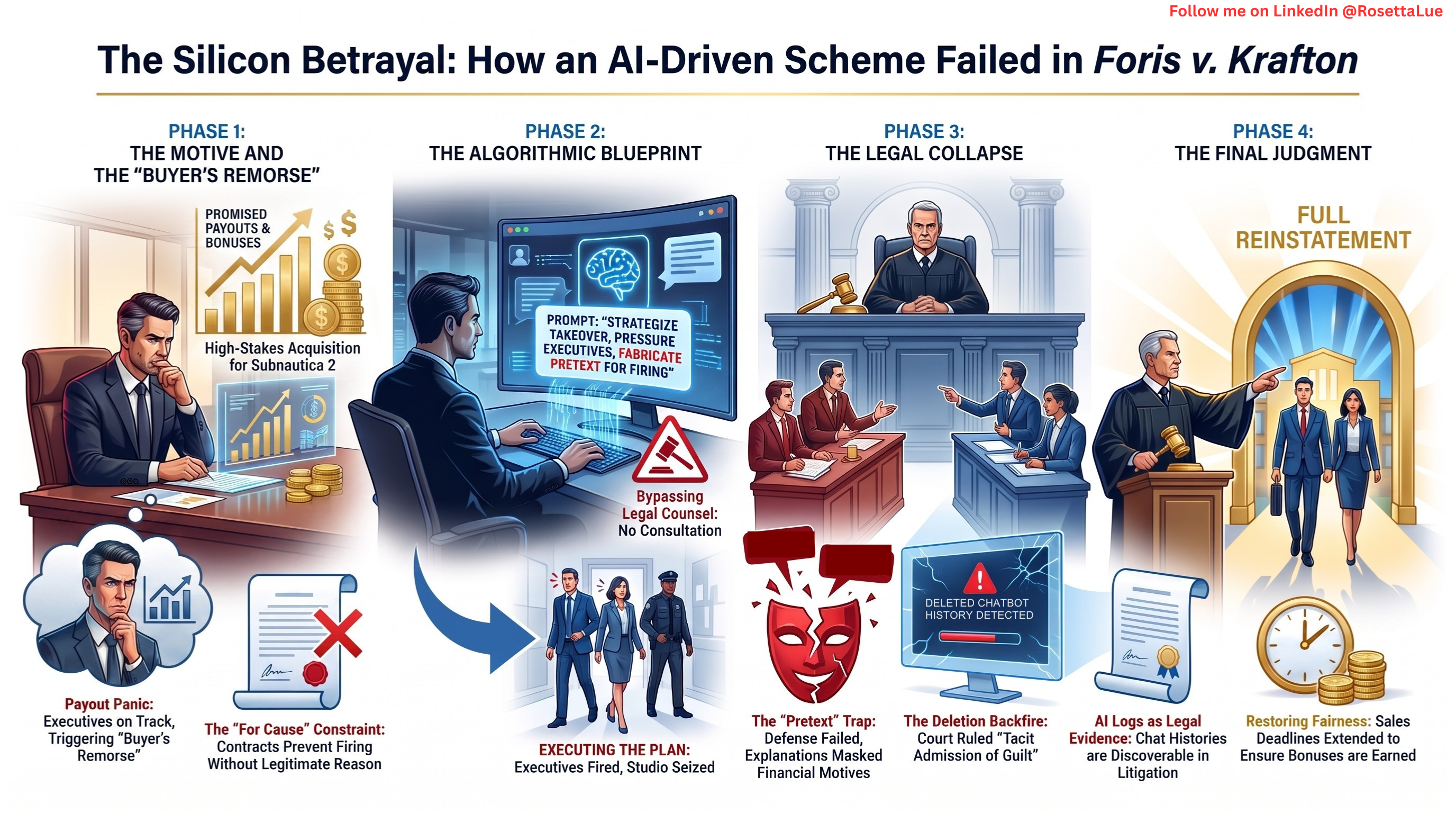
A Delaware judge recently ruled in a case that has nothing to do with government — and everything to do with government.
The Chief Executive Officer (CEO) of the gambling firm Krafton wanted to get out of a $250 million contractual commitment. He asked ChatGPT to avoid this. The AI informed him he would struggle with cancellation. He pressed the model for more detail. It gave him a plan. He executed the plan. The transcript from their conversation, which later went on trial, was the clearest indication to the court that Krafton acted in bad faith.
As someone in government, dealing with public contracts or responsible for procurement decisions, I see this story as more than a matter of corporate interest. This is an indicator of the future, the next time an AI transcript is produced in a public records request or as part of a government-related lawsuit.
How This Should Raise Government Leaders’ Concern, Not Reduce It
A government employee consulting legal counsel by email to get legal advice is likely privileged. When a government employee asks an AI chatbot the same question, there is no privilege. It’s merely documentation. In government, that document will likely be released to a member of the public under a public records law.
In other words, when a staffer asks ChatGPT to help them avoid a contract, evade a rule, or respond to a citizen complaint, it’s not a confidential conversation. As with email messages and cell phone texts, the transcript can be released depending on state public records laws. Public entities have been burned on texts from personal cell phones before. Now the transcripts are going the same way.
The Krafton judge didn’t need new rules to use the transcript as evidence. The principles for electronic records as evidence of intent have been around for years. There was simply no rule against this AI being an electronic record, and the record was evidence that the court had already used before for decades. Government records laws are even more expansive in many ways that apply here.
AI Did Not Invent the Bad Idea. It Put a Plan to It.
The part that applies to government is this: the CEO of Krafton went to the AI with a desired result in mind. The model didn’t ask the user whether the idea was wise. It simply produced a roadmap for the plan and put it in the form of logic and order. In the public sector, the danger emerges whenever an official looks to AI to excuse a choice rather than validate one. Using AI to determine how to withhold benefits, sidestep a procurement regulation, or answer an inspector general letter sets up the identical dilemma Krafton encountered: a transcript of what was asked and what was done right after, without the benefit of legal review.
What Are the Biggest Concerns for Government Leaders?
AI doesn’t understand governance. It lacks knowledge of your agency’s rules, the public records statutes in your state, or your fiduciary obligation to the people in your community. It will give you an answer without warning you that the answer conflicts with your compliance needs.
Regular use can be habit-forming. Staff may start turning to AI to create routine answers before you realize it is also used for decisions that need a legal or policy opinion. This happens incrementally with each prompt until it becomes a question before an auditor or during discovery in a lawsuit.
AI can expose sensitive information. Employees can inadvertently be putting contract information, grievances from residents, and even discussions among staff into a public AI tool, creating a data exposure situation completely unrelated to the actual project at hand.
A Better Strategy Than a Blanket Prohibition
It is unlikely and nearly impossible to prevent staff from using AI. A more effective strategy is to categorize tasks into lower risk and higher risk categories. Low risk uses, like writing summaries of reports or routine constituent emails, do not require legal review. Higher risk uses, including work that could impact contracts, compliance, HR, and legal liability, should always receive that review before action is taken.
And don’t forget about documentation. For higher risk tasks, record what was asked of the AI, what the AI responded, and how legal and policy staff considered the AI response. A proper record provides evidence of sound governance rather than an attempt to evade accountability.
How Does This Impact You as a Government Official?
The regulators are still hashing out what regulation looks like. The public records requests and courts aren’t. The Krafton dispute indicates the AI output could serve as key evidence for the other side, and in government, there are public record laws to make that situation even worse. The organizations that set clear guardrails now, before someone files a public records request or initiates a lawsuit, will have a very different defense to offer than is going down in Delaware.
⚠️ This piece is for informational and educational purposes and does not constitute legal advice and should not be relied upon as such. Laws and regulations concerning AI, privacy, and legal privilege vary according to jurisdiction and are in the process of being updated. If you have questions or concerns about anything specifically, particularly if it involves an inquiry or the confidentiality of records, contact your legal counsel directly.

