
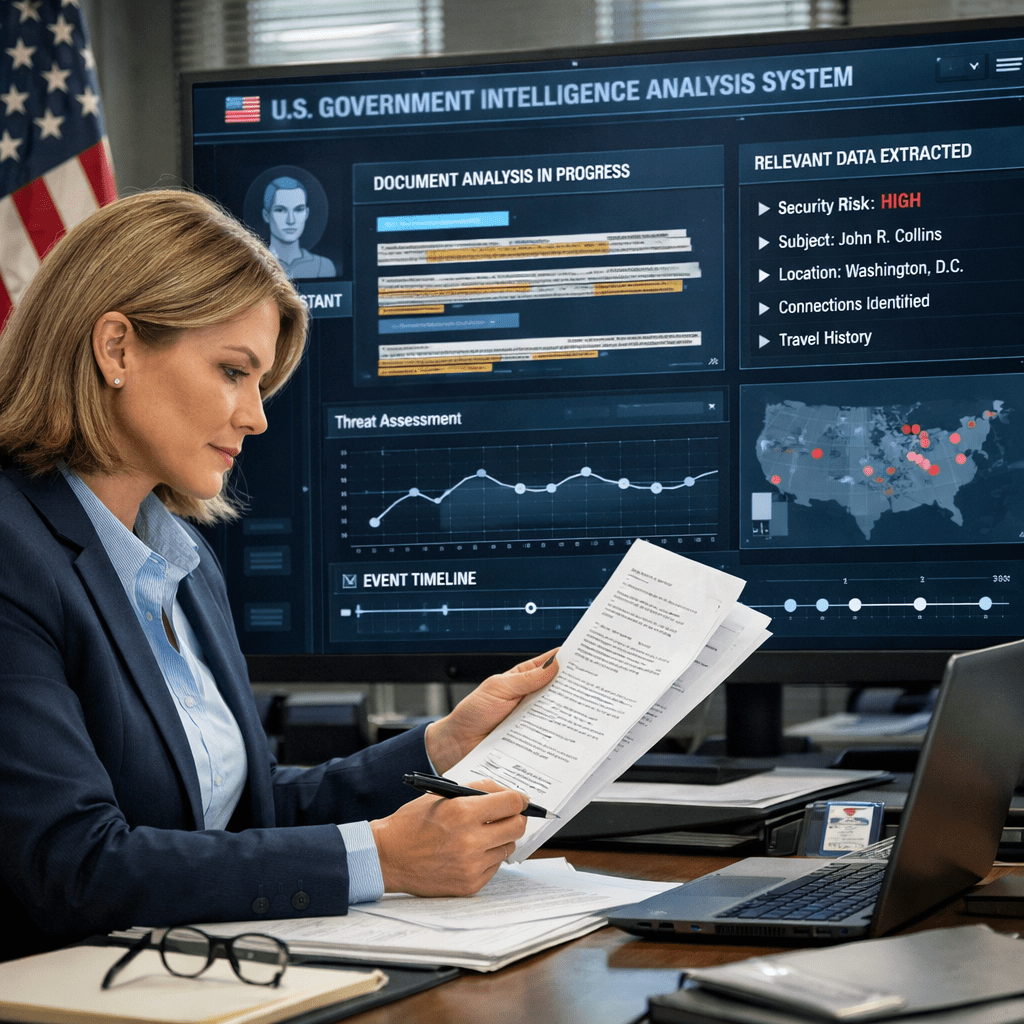
It happens in every government AI strategy meeting. Someone gets uncomfortable. The AI is making mistakes nobody fully understands. And right on cue, someone says it. “We’ll keep a human in the loop.” The room relaxes. It sounds responsible. It sounds safe. And we move on.
But I have started stopping the room when I hear it. Because those six words are doing a lot of heavy lifting without answering the one question that actually matters. What is that human doing in the loop? Because in most government agencies right now, the honest answer is “not enough.”
We Are Wasting Our Best People
Here is what “human in the loop” looks like in practice at too many agencies.
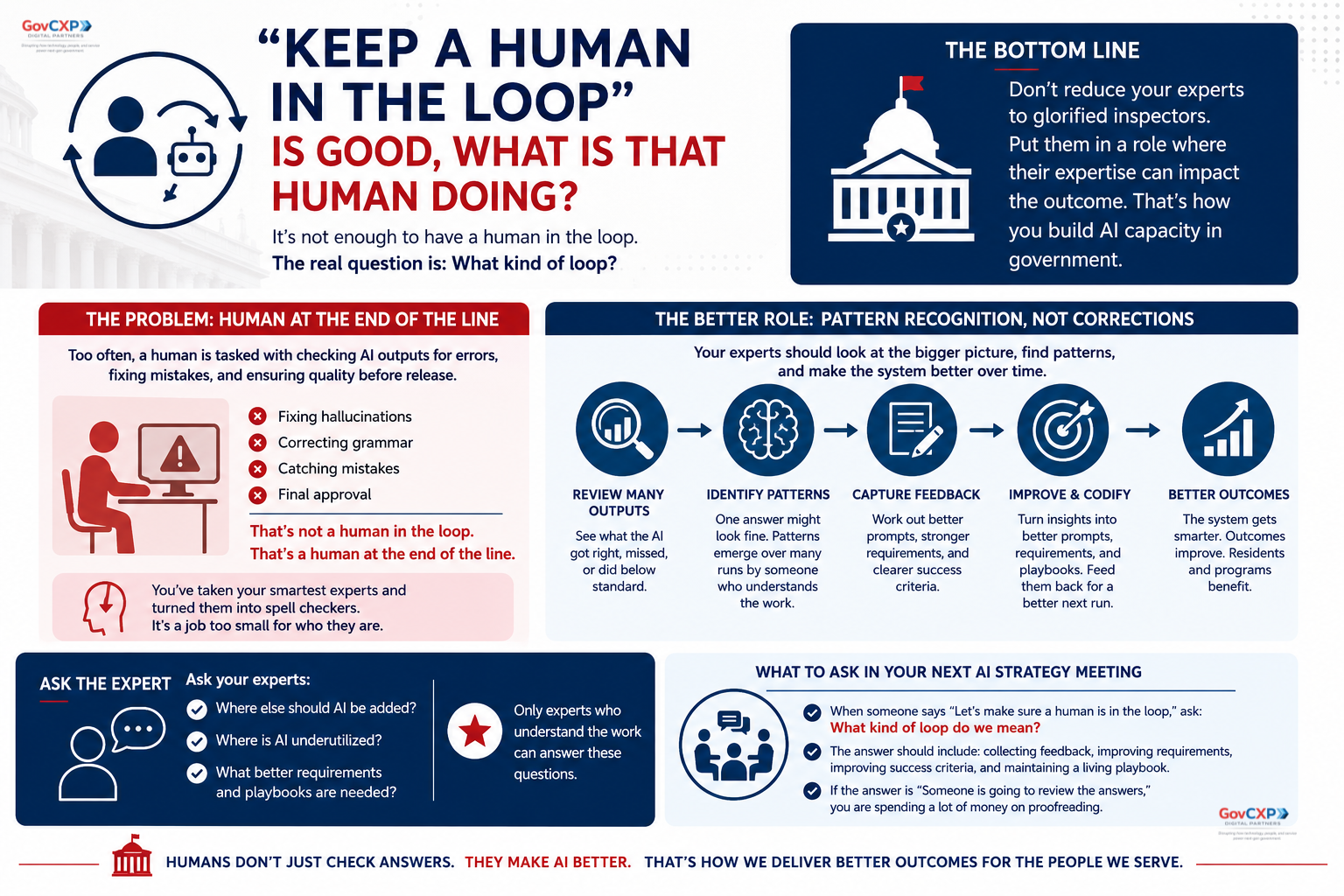
A talented, mission-driven public servant gets a new assignment. They review the AI’s output. They check for errors. They catch the hallucinations. They fix the spelling. They make sure it looks acceptable before it goes out the door. That is not a human in the loop. That is a human at the end of the line.
You took your most experienced person, the one who knows your residents, your programs, and what good service actually looks like, and gave them a cleanup job. That is not oversight. That is a waste.
And some of what they are catching should not even require a human at all. Hallucinations? Build a verification step into the AI process itself. Quality issues? Add an automated review stage before it ever reaches a person. The AI can do that work before your public servant ever sees the output.
NIST’s AI guidance points to human review, monitoring, tracking, and management oversight as pillars of responsible AI use. That is the right foundation. But at the agency level, the real question is sharper than that: where does human judgment belong so the process gets better over time?
The Role Worth Protecting Is Pattern Recognition, Not Error Correction
Here is where expertise actually has room to operate.
Not fixing one answer at a time. Looking across dozens or hundreds of outputs and asking, “Where does the AI keep getting it right?” Where does it keep falling short? Where is the response technically acceptable but still not meeting the bar we need?
A single output can look fine on its own. The pattern only shows up after the system has run the task again and again. Your subject matter expert can see that pattern because they understand what the work is actually supposed to achieve.
Once those patterns are visible, the path forward is clear. The expert refines the prompts. They sharpen the success criteria. They give the AI a more precise target to hit every single time it runs.
And that improvement has to be written down. Informal feedback does not move the needle. A better prompt, a stronger requirement, a stricter standard; and that is what gives the AI a real chance to improve run after run. Most government AI strategy conversations skip this step entirely.
Ask Your Experts the Second Question
There is another question your most knowledgeable people are perfectly positioned to answer: What else could AI be doing in this process that we have not even tried yet?
That question has to come from someone who understands the work from the inside. They can see where the AI is being underused. They can see where the playbook needs to be stronger. They can spot opportunities nobody else in the room would recognize. That is the role worth protecting and the investment worth making.
What to Ask at Your Next AI Strategy Meeting
The next time someone in the room says, “We’ll keep a human in the loop,” do not let it land and move on. Ask the follow-up question. What kind of loop do we mean?
The answer should include feedback collection, refined prompts, stronger success criteria, and a living playbook that improves every time the system runs. If the answer is just “someone will review the output,” you are building an expensive proofreading operation and calling it AI governance.
Your experts should be making the AI better over time, not cleaning up after it. Put your best people where their judgment changes how the system performs. That is how government agencies build AI capacity that actually lasts.

